Beltane Blooms: Stepping Into Your May Queen Energy
Introduction
There is a specific kind of magic that happens in the first few days of May. The morning dew feels a little more "enchanted," the birdsong hits a higher frequency, and the world seems to transform from a gentle spring green into a deep, vibrating emerald.
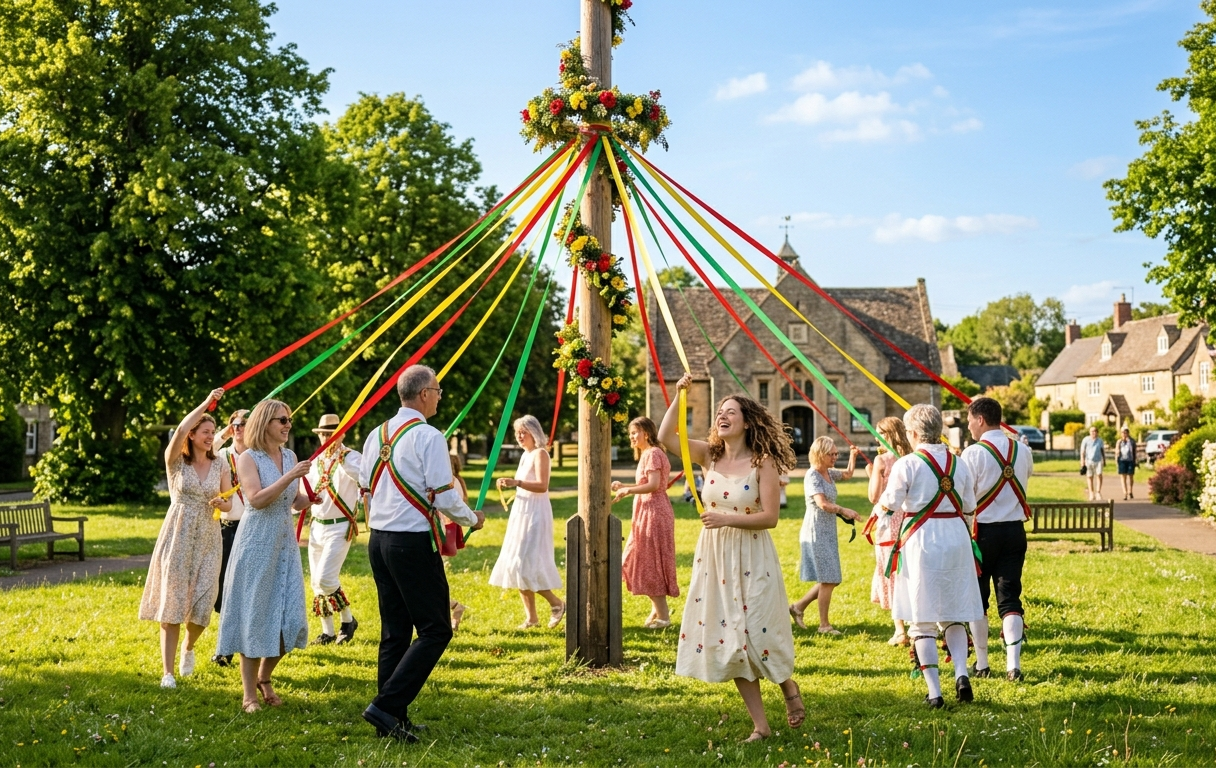
Historically, this time of year centres around Beltane—the ancient festival marking the peak of Spring and the beginning of Summer. It’s a celebration of fire, fertility, and the "May Queen." But even if you aren’t dancing around a Maypole this year, you can still tap into that potent energy of sovereignty and growth through the power of scent.
A Quick Safety Note
As always when working with essential oils, it’s important to point out a few safety notes in mind and ensure that they are followed mindfully.
Some essential oils such as Rosemary and Eucalyptus are reported to have properties that can trigger those living with Epilepsy, so caution is very important and avoid or speak to your doctor if you are unsure.
Where possible alternative essential oils are suggested for use if you’re unable to use some, but do NOT risk using any ingredient if you are unsure.
Essential oils must never be used on your skin without being diluted in a carrier oil, and must never be ingested or taken internally. In the event that essential oils get onto your skin, wash off immediately with warm water and your usual soap and monitor for any affects. If in the eyes, rinse a few times with milk and seek medical advice immediately.
Always ensure your space is well-ventilated when diffusing, especially around pets or small children. If applying mist to fabrics, do a small patch test first to ensure the oils don't stain.
This article is for educational purposes only and is NOT a substitute for medical advice or treatment. Always be mindful of safety with everything you make, and remember:
If in doubt, Check it out.
A Brief History of Beltane and May Day
Beltane, traditionally observed on May 1st, is an ancient Gaelic festival marking the midpoint between the spring equinox and the summer solstice. Historically, it signified the beginning of the pastoral summer season when livestock were driven out to the green pastures. The celebration was deeply rooted in the concept of fertility and protection, with the lighting of community bonfires serving as the central ritual; these "lucky" fires were believed to protect the herd and the people from disease and supernatural harm. Over the centuries, these pagan roots merged with various European folk traditions to become May Day. This evolution introduced iconic customs such as the Maypole dance, which symbolizes the budding energy of nature, the crowning of a May Queen to represent the goddess of Spring, and the hanging of May Baskets filled with flowers on neighbours' doors to celebrate the return of the sun and the blossoming Earth.
The Aromas of the "Great Bloom"
To celebrate the transition into May’s warmth, we look to the "Royal" oils—the heavy hitters of the floral world that demand attention and celebrate the heart.
Rose (The Heart Opener): Rose is the undisputed Queen of May. It takes many petals to produce a single drop of oil, making it a high-vibration essence that encourages self-compassion and emotional luxury.
Ylang-Ylang (The Spark): With its creamy, exotic scent, Ylang-Ylang represents the "fire" of the season. It’s known for lowering stress while simultaneously boosting a sense of playfulness and passion.
Cedarwood (The Maypole): To keep our floral spirits from drifting too far into the clouds, we add the earth. Cedarwood provides a sturdy, woodsy base that mimics the ancient trees people once gathered around to celebrate the new season.
The "May Queen" Diffuser Blend
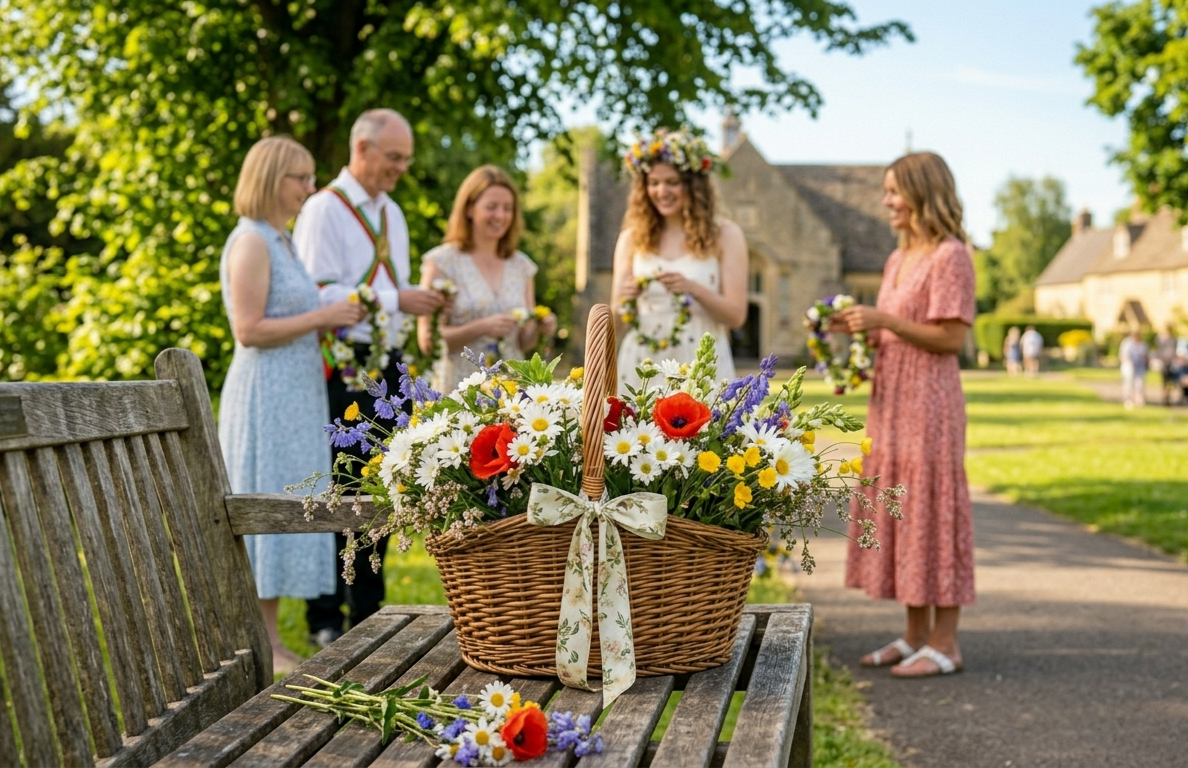
In centuries past, people would leave "May Baskets" filled with flowers and treats on the doorsteps of friends and lovers. This diffuser blend is your modern, aromatic version of that tradition—a gift of joy for your entire home.
The "May Queen" Blend:
3 drops Rose (or Geranium for a budget-friendly swap!)
2 drops Bergamot (for a splash of citrus sunshine)
1 drop Ylang-Ylang (the "wild" element)
2 drops Cedarwood (the grounding earth)
Pro-Tip: If you’re feeling bold, add a single drop of Black Pepper to this blend. It adds a subtle "heat" that honours the traditional Beltane bonfires!
Claiming Your Sovereignty
May is a reminder that you are allowed to take up space. Just as the wildflowers don't ask permission to bloom in the meadow, you don't need permission to step into your most vibrant self this month.
Whether you’re starting a new project or simply reclaiming your peace of mind, let the scent of Rose and Earth be your anchor.
What are you "planting" in your life this May? Tell me in the comments below!

My References and Further Reading
Historical & Cultural Traditions
Beltane & Gaelic Folklore: I referenced the ancient Gaelic fire festival of Bealtaine, which marks the beginning of summer and the "light half" of the year. Key themes like the union of the May Queen (Earth) and the Green Man (Sun) are central to the Beltane Fire Society and historical accounts of Irish and Scottish customs.
May Baskets: The tradition of hanging paper cones or baskets of flowers on neighbours' doors is a 19th and early 20th-century custom particularly popular in New England and parts of Europe, as documented by various historical societies (e.g., Westport Historical Society).
The Maypole: This represents the "world tree" or axis, a symbol of fertility and community, which influenced the inclusion of "grounding" woodsy oils in the blend.
Hutton, Ronald. The Stations of the Sun: A History of the Ritual Year in Britain. Oxford University Press, 1996. (Expert detail on the evolution of British seasonal festivals).
Frazer, Sir James George. The Golden Bough: A Study in Comparative Religion. Macmillan & Co, 1890. (Classic text on the significance of bonfires and fertility rituals in early European cultures).
Monaghan, Patricia. The Encyclopaedia of Celtic Mythology and Folklore. Checkmark Books, 2004. (Specifics on the Gaelic origins and the name "Beltane").
Simpson, Jacqueline and Roud, Steve. A Dictionary of English Folklore. Oxford University Press, 2000. (Covers the folklore behind May Day celebrations like the Maypole and May Queen).
2. Aromatherapy & Botanical Symbolism
Rose (Rosa Damascena): Widely recognized in clinical aromatherapy (e.g., by experts like Robert Tisserand) and the "Language of Flowers" as the ultimate oil for the heart, emotional relief, and high-frequency "Queen" energy.
Ylang-Ylang (Cananga odorata): Often referred to as the "Flower of Flowers," it is traditionally used as an aphrodisiac and euphoric oil, which aligns with the Beltane themes of fertility and passion.
Cedarwood (Cedrus Atlantica): Used here as a "fixative" and grounding agent. In folklore, cedar is often associated with protection and incorruptibility, serving as the "anchor" for the lighter floral notes.
3. Esoteric & Seasonal Correspondences
Fire & Sun: Since Beltane is a "Fire Festival," I included Bergamot for its solar/citrus energy and suggested Black Pepper as an optional "heat" element to mimic the ritual bonfires.
The Emerald Theme: Referenced the traditional birthstone of May (Emerald) to inspire the visual "lush green" aesthetic of the post.