The Heart’s Bloom: Aromatherapy for Connection and Vulnerability
Introduction
In the first part of our Alchemy of Affection series, we built a foundation of self-love. We anchored ourselves in the grounding scent of Sandalwood and the acceptance of Bergamot. Now that we have come home to ourselves, we are ready to open the windows.
In mid-February, as the world turns its attention toward romance, we explore the aromatherapy of the "Heart Space." This isn't just about candlelit dinners; it’s about the courage to be seen, the softness of vulnerability, and the deep reflection required to nurture a lasting bond.
A Quick Safety Note
Anyone who’s read Part 1 of this series would have seen this section before. But it’s important to keep the safety notes in mind and ensure that they are followed mindfully.
Essential oils are not the same as fragrance oils. Some people can develop sensitivities or allergies to oils, so a patch is very important.
To conduct a patch test, place a drop or small amount of the finished product onto the inside of the elbow on one arm or the inside of the knee. Leave for up to 24 hours, unless a reaction occurs. The skin there is sensitive and if an allergy is present the area could become itchy, red or blotchy or a combination of these. If irritation does occur, wash the area with warm clean water and do not use the product again. Seek medical attention if you find that irritation continues or if your symptoms get worse. But do NOT risk using an ingredient if you are unsure.
Essential oils must never be used without being diluted in a carrier oil, and must never be ingested or taken internally.
Some essential oils such as Rosemary and Eucalyptus are reported to have properties that can trigger those living with Epilepsy, so caution is very important and avoid or speak to your doctor if you are unsure.
This article is for educational purposes only and is NOT a substitute for medical advice or treatment. Always be mindful of safety with everything you make.
The Chemistry of Connection: Opening the Heart Space
Why do we associate certain scents with love? It isn’t just poetry; it’s physiology. When we are stressed or guarded, our bodies produce cortisol, which can make us feel "closed off" or defensive. Heart-opening essential oils often contain high levels of esters and alcohols—compounds known to soothe the nervous system and encourage the release of oxytocin, often called the "cuddle hormone."
By diffusing these oils, we aren't just "making the room smell nice"—we are signalling to our nervous system that it is safe to let our guard down.
The Trio of Intimacy: Rose, Ylang Ylang, and Neroli
To foster connection and reflection, we turn to the most precious oils in the aromatherapist’s collection.
Rose (Rosa Damascena): The Queen of Flowers
The Power: Based on the research of Bruce Tainio (1992), it is commonly believed in aromatherapy that Rose has the highest spiritual frequency of any essential oil. It is the ultimate "heart opener," helping to heal emotional wounds and invite a sense of divine love and compassion.
The Ritual: Use Rose to move from "head-space" to "heart-space." It softens the edges of our personalities so we can truly connect.
Ylang Ylang (Cananga Odorata): The Oil of the Inner Child
The Power: Known for its heady, exotic floral aroma, Ylang Ylang is a powerful aphrodisiac—not just because of its scent, but because it dispels anger and anxiety. It encourages a sense of euphoria and playfulness.
The Ritual: Perfect for couples who have been bogged down by the "business" of life and need to rediscover joy and attraction.
Neroli (Citrus aurantium): The Oil of Shared Peace
The Power: Distilled from orange blossoms, Neroli is the oil of "long-term calm." It is traditionally used in wedding bouquets because it soothes the "nerves" of intimacy and promotes a peaceful, steady devotion.
The Ritual: Use Neroli for deep reflection and difficult conversations. It brings a sense of purity and clarity to communication.
The Reflective Bath: A Ritual for Two (or for One)
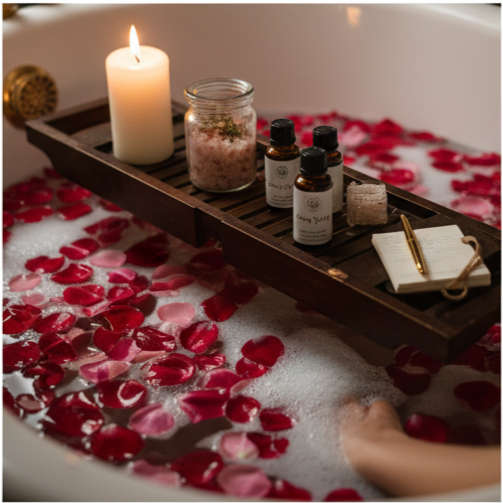
Reflection is the bridge between self-love and shared love. This bath ritual is designed to be a quiet space for contemplation.
The "Alchemy of Affection" Bath Blend:
1 cup Epsom Salts (to ground the energy)
1 tablespoon Jojoba or Sweet Almond Oil
2 drops Rose (or Rose Absolute)
2 drops Ylang Ylang
2 drops Neroli
The Ritual:
Prepare the Space: Dim the lights and perhaps light a single candle.
Set the Intention: As the water runs, set an intention for your relationship or your heart. Ask: "What am I ready to share?" or "What can I forgive?"
Soak & Reflect: Spend 20 minutes in the warmth. If you are with a partner, use this time to share one thing you appreciate about each other that has nothing to do with chores or daily life.
The Journal Connection: After the bath, write down three words that describe the "energy" you want to bring into your relationships this spring.
Partner Diffusion Guide: Scenting Your Connection
Different dynamics require different "atmospheres." Which one does your home need this week?
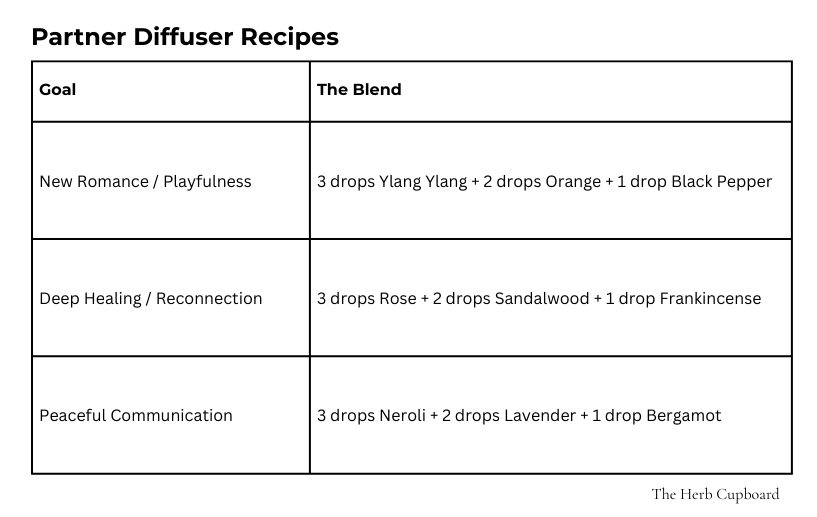
These recipes are perfect for oil diffusers, whether that’s a traditional oil burner or a clay/stone/wood diffuser.
Next in the Series:
As February draws to a close, we move from the warmth of the heart to the fresh energy of the earth. Join us for Part 3: The First Breath of Spring, where we clear the winter air and prepare to bloom.
References and Further Reading
1. Rose Oil: The "Heart Opener"
Oxytocin & Social Bonding: Recent research (2025) published in Tyler Aromatherapy and related wellness insights suggests that inhalation of floral oils like Rose and Neroli is linked to increased feelings of social bonding, likely through the stimulation of oxytocin pathways.
Autonomic Relaxation: A study in ResearchGate ("Relaxing Effect of Rose Oil on Humans") confirms that Rose oil significantly decreases breathing rate and blood pressure, shifting the body from a "fight or flight" state to a "rest and digest" state, which is essential for vulnerability and connection.
Mental Health: Earth Sun Essentials (2025) notes that Rose oil modulates activity in the prefrontal cortex and amygdala, helping to process unresolved emotions and foster emotional inner strength.
2. Ylang Ylang: The "Oil of Joy"
Self-Esteem & Anxiety: A pilot study involving nursing professionals (published in SciELO) found that while Ylang Ylang may not always drastically lower clinical anxiety, it has a significant impact on improving self-esteem, which is critical for feeling "worthy" of connection.
Physiological Calm: Research from the American College of Healthcare Sciences (2013/updated 2024) indicates that Ylang Ylang significantly reduces heart rate and systolic/diastolic blood pressure, creating the "serene atmosphere" mentioned in your post.
3. Neroli: The "Oil of Vulnerability"
Anxiety Reduction: A systematic review in Frontiers in Public Health (2023) identified Citrus aurantium (Neroli) as one of the most recommended essential oils for treating anxiety due to its significant effect on both state and trait anxiety scores.
Emotional Release: Research published via ResearchGate (2025) describes Neroli as a "stabilizing agent" that assists in retrieving and releasing repressed emotions, making it a perfect recommendation for "Deep Reflection" rituals.