The Foundation of Self-Love: Cultivating Your Inner Sanctuary with Scent
Introduction
Welcome to "The Alchemy of Affection," a journey through the heart of aromatherapy this February. We begin not with grand gestures, but with the quiet, profound act of turning inward. Before we can extend love outward, we must first cultivate it within—a concept beautifully encapsulated by the practice of self-love.
Think of self-love not as a luxury, but as the foundational bedrock upon which all other connections are built. It’s the gentle affirmation, the silent understanding, and the unwavering support you offer yourself, day in and day out. In a world constantly pulling for our attention, dedicating time and intention to our inner world is a revolutionary act. And what better guide for this revolution than the subtle power of scent?
A Quick Safety Note
As with all of my blog posts that give you the opportunity to make your own recipes, I’ll reiterate a few safety notes that are important to keep in mind and follow.
Essential oils are not the same as fragrance oils. Some people can develop sensitivities or allergies to oils, so a patch is very important.
To conduct a patch test, place a drop or small amount of the finished product onto the inside of the elbow on one arm or the inside of the knee. Leave for up to 24 hours, unless a reaction occurs. The skin there is sensitive and if an allergy is present the area could become itchy, red or blotchy or a combination of these. If irritation does occur, wash the area with warm clean water and do not use the product again. Seek medical attention if you find that irritation continues or if your symptoms get worse. But do NOT risk using an ingredient if you are unsure.
Essential oils must never be used without being diluted in a carrier oil, and must never be ingested or taken internally.
Some essential oils such as Rosemary and Eucalyptus are reported to have properties that can trigger those living with Epilepsy, so caution is very important and avoid or speak to your doctor if you are unsure.
This article is for educational purposes only and is NOT a substitute for medical advice or treatment. Always be mindful of safety with everything you make.
The Whispers of Your Limbic System: How Scent Builds Self-Love
Have you ever noticed how a particular smell can instantly transport you back in time, or shift your mood in an instant? That’s your limbic system at work—the amazing part of your brain responsible for emotion, memory, and motivation. When you inhale the aroma of an essential oil, its volatile compounds travel directly to this control center, bypassing conscious thought and directly influencing your emotional state.
For self-love, this means we can consciously choose scents that ground us, uplift us, and help quiet the incessant "self-talk" noise that often undermines our inner peace. It's about creating a direct, non-verbal dialogue with your deepest self.
Your Self-Love Scent Profile: Grounding & Nurturing Aromas

For building this essential foundation, we turn to oils renowned for their ability to anchor, soothe, and promote self-acceptance.
Sandalwood (Santalum album): The Earthy Embrace
Why it's perfect: Sandalwood is profoundly grounding and calming. Its rich, woody aroma has been used for centuries in meditation to quiet the mind, foster inner peace, and reduce anxiety. It helps you feel rooted and secure within yourself.
Self-love note: Use sandalwood when you feel scattered or disconnected. It’s like a gentle hug for your soul, reminding you of your inherent worth.
Bergamot (Citrus bergamia): The Light of Self-Acceptance
Why it's perfect: Unlike many bright citrus oils, Bergamot is unique in its ability to be both uplifting and calming. It's often called the "oil of self-acceptance" because it helps release feelings of unworthiness, fostering a sense of joy and self-confidence.
Self-love note: Reach for bergamot when you need a boost of cheer or feel critical of yourself. It encourages you to embrace your authentic self with compassion.
Geranium (Pelargonium graveolens): The Harmonizing Heart
Why it's perfect: Geranium is a beautiful balancer, especially for emotions. Its sweet, rosy aroma helps to ease stress, reduce frustration, and promote feelings of well-being and emotional stability. It helps bridge the mind and heart.
Self-love note: Geranium is your ally when emotions feel out of sync. It encourages a gentle flow of self-compassion and emotional equilibrium.
The Morning Mirror Ritual: Setting Intentions for Self-Love
This ritual is simple, powerful, and takes just a few moments to integrate into your daily routine.
What you'll need:
A 10ml roll-on bottle
10 drops of Sandalwood essential oil
5 drops of Bergamot essential oil
5 drops of Geranium essential oil
Fractionated Coconut Oil (or Jojoba oil)
A mirror (any mirror will do!)
Instructions:
Add the essential oils to your roll-on bottle.
Fill the rest of the bottle with fractionated coconut oil, leaving a small space at the top.
Replace the rollerball and cap, then gently roll the bottle between your palms to mix.
Each morning, after washing your face or brushing your teeth, stand before your mirror.
Roll the blend onto your pulse points (wrists, neck) or over your heart space.
Look yourself in the eyes. Take a deep breath, inhaling the aroma.
Silently (or aloud), repeat a self-love affirmation. Some ideas:
"I am worthy of love and kindness."
"I choose self-compassion today."
"I am enough, exactly as I am."
"I am capable of handling what comes my way."
Carry this intention with you throughout your day. Reapply whenever you need a reminder.
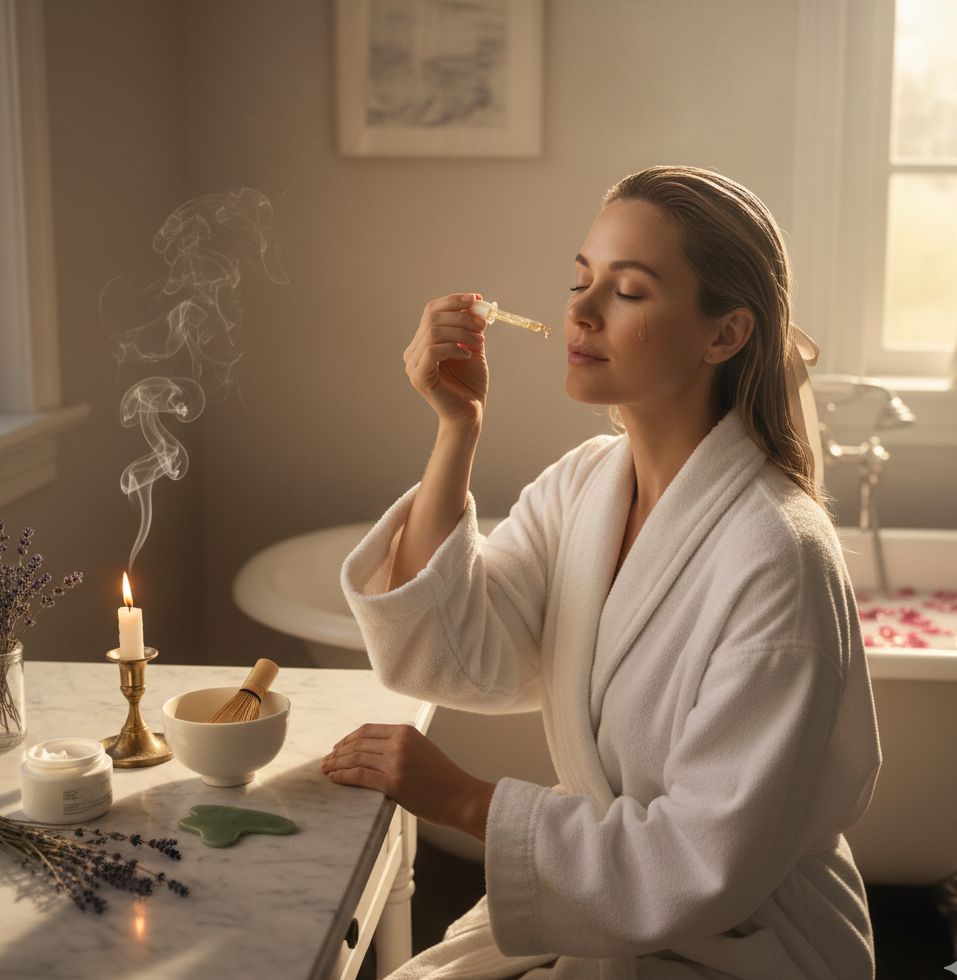
This February, let's make a conscious choice to nourish our inner selves. The foundation of self-love is the strongest ground from which all other forms of affection can beautifully blossom.
What's your favorite essential oil for a moment of self-care? Share in the comments below!
Coming Up Next in "The Alchemy of Affection":
Part 2: Heart-Opening & Connection: We'll explore aromatherapy for deepening romantic bonds and fostering vulnerability.
References and Further Reading:
If you’d like to look a little further, this the reading list I used. Feel free to comment with your own experience and reading, it would be great to read more.
PubMed: Aromatherapy and Essential Oils: Holistic Strategies for Wellbeing (2025).
Science Magazine: The Human Nose Can Smell 1 Trillion Scents (The science behind olfactory impact).
Tainio Technology Research: Studies on the vibrational frequency of Bergamot (105 MHz) and its link to self-acceptance.
1. Oil Properties & Emotional Profiles
Bergamot: Often referred to in aromatherapy as the "Oil of Self-Acceptance." It is unique because it is both a stimulant and a sedative, helping to clear "mental clutter" and self-judgment (Sources: Base Formula, Young Living, Duxmore Botanics).
Sandalwood: Extensively documented as a grounding agent that quiets the "chatter of the mind." Clinical studies, including a 2014 study in ScienceDirect, highlight its ability to reduce anxiety and promote physiological relaxation (Sources: PubMed, Nikura Wellness).
Geranium: Widely recognized for its hormonal and emotional balancing properties. It is frequently recommended for "harmonizing the heart" and easing frustration (Sources: Lively Living, Quintis).
2. The Science of Scent (Limbic System)
Direct Path to the Brain: Scent is the only sense that bypasses the thalamus and goes directly to the amygdala and hippocampus (the brain's emotional and memory centres). This is why scent is a more effective "anchor" for intentions than visual or auditory cues (Sources: The Scented Essence, NIH research papers).
Neurotransmitter Stimulation: Citrus oils like Bergamot have been shown to trigger the release of serotonin and dopamine, which are essential for the "uplift" needed in self-love practices (Source: Maison 21G).
3. Rituals & Traditional Use
Sandalwood History: Used for over 4,000 years in meditation and spiritual rituals to anchor the "self" and foster divine communication (Source: New Directions Aromatics).
Italian Folk Medicine: Bergamot has a deep history in Southern Italy (Calabria) for protecting against "negative energies" and warding off "bad spirits"—the folklore equivalent of modern self-doubt (Source: David Publishing, History of Bergamot).