Beyond the Screen (Part 3): Designing a Sensory Sanctuary That Discourages Scrolling
Introduction
In the first two parts of this series, we talked about how to unplug at night and how to buffer your morning. But what about the hours in between? What about the environment we live in?
Most of our homes have been unintentionally designed for digital consumption. Our couches face the TV; our charging cables are always within reach; our night stands are built for phones rather than books. When our environment makes technology the "easiest" choice, our willpower eventually fails.
To truly master our digital habits, we need to move beyond willpower and start practising environmental design.
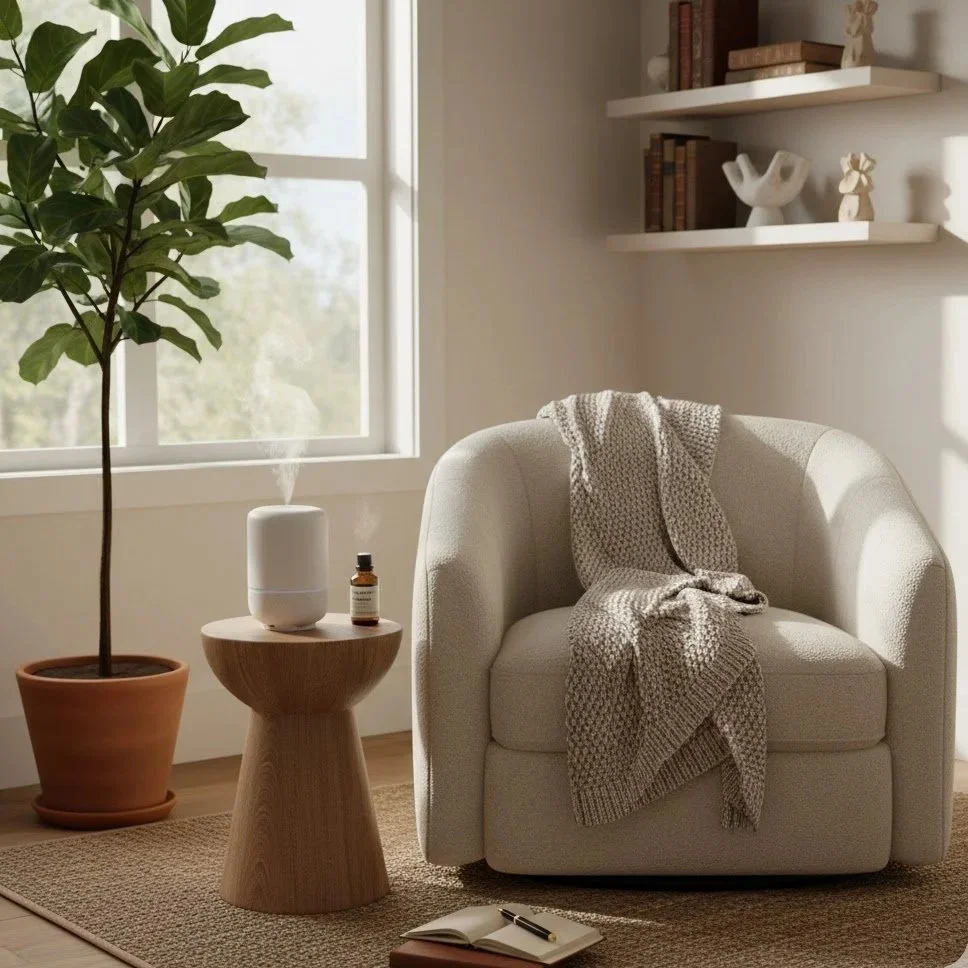
In this final instalment, we are exploring the Sensory Sanctuary. This is the art of using aromatherapy and "scent-mapping" to define the boundaries of your home. We’ll learn how to create "No-Tech Zones" that smell so inviting you won’t even want to bring a screen inside them, and how to use scent to signal exactly what each room in your house is for.
A Quick Safety Note
As always, a few safety notes are important to keep in mind and follow.
Essential oils are not the same as fragrance oils. Some people can develop sensitivities or allergies to oils, so a patch is very important.
To conduct a patch test, place a drop or small amount of the finished product onto the inside of the elbow on one arm or the inside of the knee. Leave for up to 24 hours, unless a reaction occurs. The skin there is sensitive and if an allergy is present the area could become itchy, red or blotchy or a combination of these. If irritation does occur, wash the area with warm clean water and do not use the product again. Seek medical attention if you find that irritation continues or if your symptoms get worse. But do NOT risk using an ingredient if you are unsure.
Essential oils must never be used without being diluted in a carrier oil, and must never be ingested or taken internally.
Some essential oils such as Rosemary and Eucalyptus are reported to have properties that can trigger those living with Epilepsy, so caution is very important and avoid or speak to your doctor if you are unsure.
This article is for educational purposes only and is NOT a substitute for medical advice or treatment. Always be mindful of safety with everything you make.
Scent-Mapping: Defining Your "Tech-Free" Boundaries
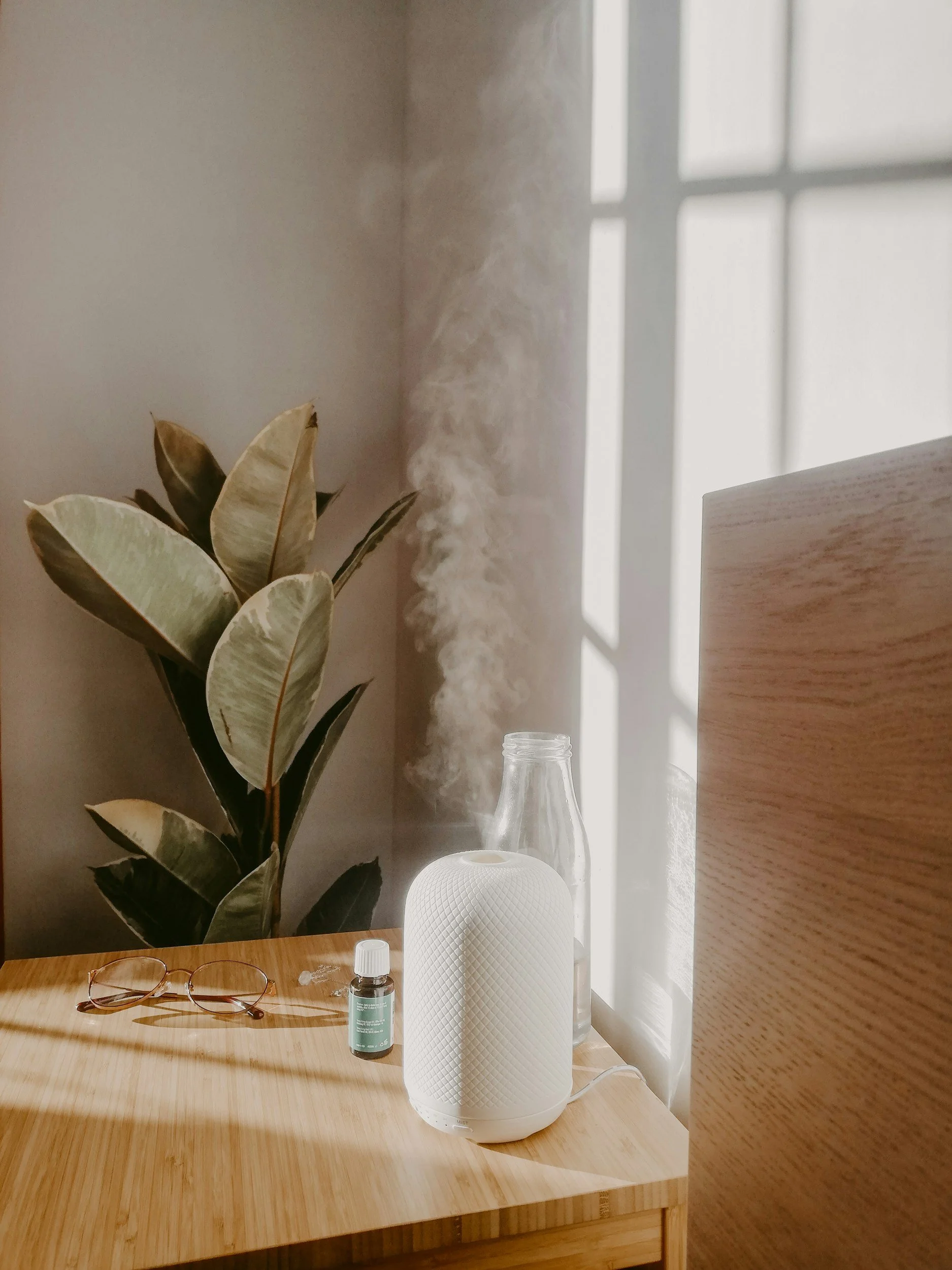
In a "Sensory Sanctuary," we use different scent profiles to tell our brains what to do in specific areas. This creates a psychological boundary that a physical wall can’t provide.
1. The Living Room: The "Social Anchor"
The Goal: To encourage conversation, reading, or rest without the hum of background TV or phone scrolling.
The Scent: Cedarwood & Orange.
Why: Cedarwood provides a sense of community and security, while Orange adds a layer of warmth and light-heartedness. It makes the room feel "full" even without digital noise.
2. The Bedroom: The "Sacred Silence"
The Goal: A total ban on blue light and "doom-scrolling."
The Scent: Ylang Ylang & Sandalwood.
Why: These are "heavy" floral and woody scents that slow the pulse. When your bedroom smells like a high-end spa, a glowing smartphone feels like a jarring intrusion.
3. The Workspace: The "Focus Fortress"
The Goal: High-intensity focus followed by a clean "break" when the work is done.
The Scent: Lemongrass & Pine.
Why: These scents are "clean" and "upward." They clear the mental cobwebs and help you stay sharp, making it easier to finish work on time rather than lingering in your inbox all evening.
Sanctuary Recipes: Blends for Every Zone
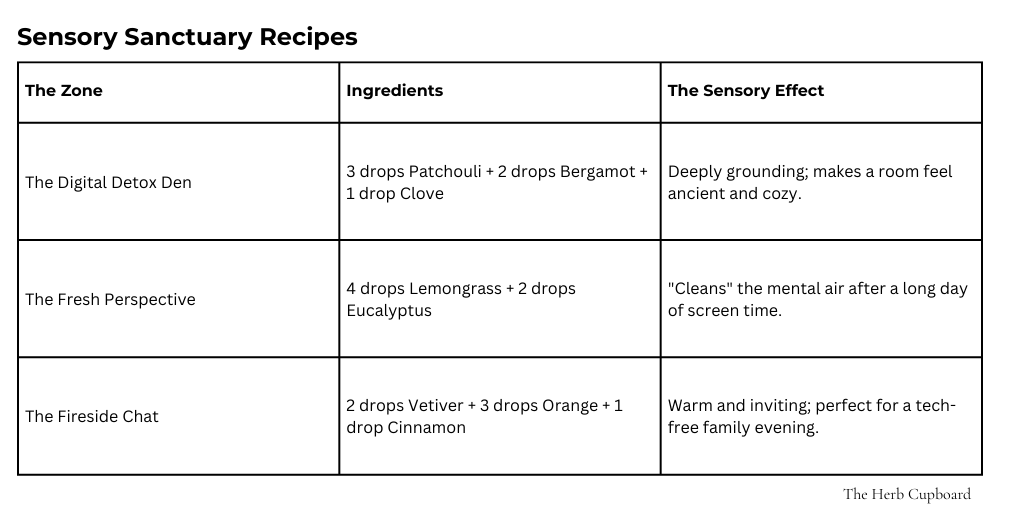
The Sensory Sanctuary Ritual: "Clearing the Air"
To maintain your sanctuary, follow this weekly ritual to reset your environment.
The Tech-Tidy: Every Sunday (or a day of your choice), gather all "loose" devices (tablets, extra chargers, gaming controllers) and place them in a designated "tech-basket" inside a cabinet.
The Aromatic Reset: Open the windows for 10 minutes to let out the "stale" indoor air. Then, walk through each room with a Lemongrass mist to "clear" the digital residue of the week.
The Anchor Light: As you turn on your diffusers in their respective zones, light a candle in the centre of the home. This acts as a visual and olfactory "hearth" - the place where the family gathers away from screens.
Part 3 Checklist: Your Environment Reset
[ ] Identify one "No-Phone Zone" in your home (e.g., the dining table or a specific chair).
[ ] Scent-map that zone with a specific essential oil.
[ ] Create a "charging station" outside of your bedroom.
[ ] Download the Sensory Sanctuary Floor plan Guide (below!).
Conclusion: Turning the Key on Your New Sanctuary
Creating a Sensory Sanctuary isn't about achieving interior design perfection; it’s about reclaiming the sovereignty of your home. By intentionally "scent-mapping" your space, you’ve done something profound: you’ve told the digital world that it no longer has an all-access pass to your life.
When you walk through your front door and are greeted by the grounding notes of Cedarwood or the clarifying lift of Lemongrass, your nervous system receives a clear message: You are safe. You are present. You are home.
The screens will always be there, but they no longer have to be the centre of your gravity. You now have the tools to unwind your nights, protect your mornings, and anchor your environment. You’ve traded the endless, flickering blue light for the steady, ancient power of the botanical world.
The door to your sanctuary is open. All you have to do is step inside and breathe.
Final Step: Map Your Peace
Don't let your transformation stop at the screen. To help you visualize your new boundaries, I’ve created the Sensory Sanctuary Floor plan Guide. Use it to assign scents to your "No-Phone Zones" and turn your house into a true home.
A Note from the Author: The Journey Continues
This concludes our "Beyond the Screen" series! I would love to hear which of the three parts resonated with you most. Have you started scent-mapping your living room? Did the "Morning Moat" change your perspective? Share your journey in the comments below or tag me in a photo of your new "Sensory Sanctuary" on Instagram (@herbcupboard). Let’s keep the conversation—and the diffusers—going!